

The problem: How to get fourteen people that couldn’t be in the same room, let alone the same beach, into one group shot.
The brief was simple. The assets were not.
A resort hotel group with sales offices on two Caribbean islands and in Florida needed a holiday card. The full sales and marketing team, together on a beach, smiling for the camera.
What arrived were four separate photos. Three group shots taken at different times, in different locations, with different lighting. And one individual shot, cut off at the waist with his arms folded against a city skyline.
What Each Photo Brought to the Table
Every compositing job starts with an honest look at the source material. Not what you wish you had, but what’s actually in front of you. These four photos each brought a different category of problem.
The group of three is standing on wet sand with water covering their feet. The reflections beneath them are baked into the image. Move them to dry white sand and those reflections come along for the ride, or you crop at the ankles and suddenly nobody has feet.
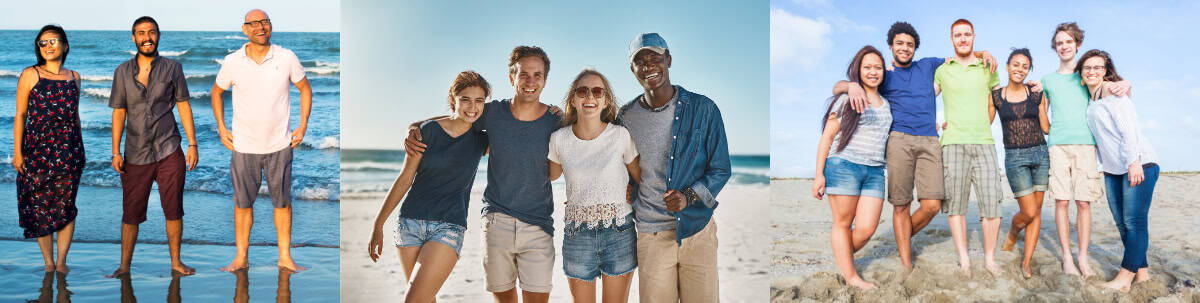
The group of four is linked at the shoulders and cropped at the thighs. The AI needs to generate legs and feet for all four of them, and if you want to separate individuals, it also has to figure out what’s behind those overlapping arms.
The group of six has everyone draped over each other’s shoulders. Pulling one person out means the AI is guessing at whatever was hidden behind someone else’s arm.
Then there’s the photo of the individual.
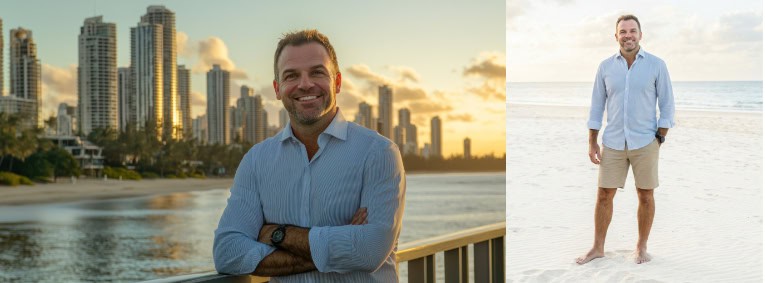
Waist up. Arms folded. Golden hour light. City skyline behind him. He needs to end up barefoot on a bright Caribbean beach standing next to thirteen other people.
The AI had to build everything below his belt. Legs, a natural stance, bare feet on sand. None of it existed in the original. And those folded arms had to go. One prompt gave us the full body, arms relaxed, lighting shifted from golden hour to match the beach plate. Half of this person is real. The other half was written in a few sentences.
This fix had to happen first, before he could go anywhere near the group composite.
Why? Because of the different lighting and different background. If we mixed this image with the others, the AI would pull from the city background and golden hour lighting when creating the composite.
The Beach That Didn’t Exist Yet
With four sets of people ready, the next question was where to put them.
Caribbean resort hotels sell a feeling. Aqua water, white sand, blue sky. That’s what the client expects on the holiday card. But that postcard look comes with a cost: harsh, direct sunlight. And harsh sunlight means hard shadows under every nose and chin. When you’re matching shadow direction across fourteen people pulled from four different lighting conditions, hard light exposes every inconsistency.
A cloudy sky would solve the shadow problem entirely. Soft, diffused light is forgiving for compositing. But nobody puts a holiday card on the fridge that looks like it’s about to rain.
The answer landed somewhere between the two. A plate with what I’d call hazy bright light. The sky reads light blue, the ambient light is strong, but that tropical humidity softens everything just enough. No harsh shadows to fight, but it still feels like a warm, sunny day. The kind of lighting where your compositing mistakes get to stay quiet.
This plate became the reference point. Every person in the composite had to match its color temperature and shadow behavior. Getting it right here made everything downstream easier.
Three Runs, Three Different Realities
All four corrected source images and the beach plate were fed into Freepik with a single composite prompt.
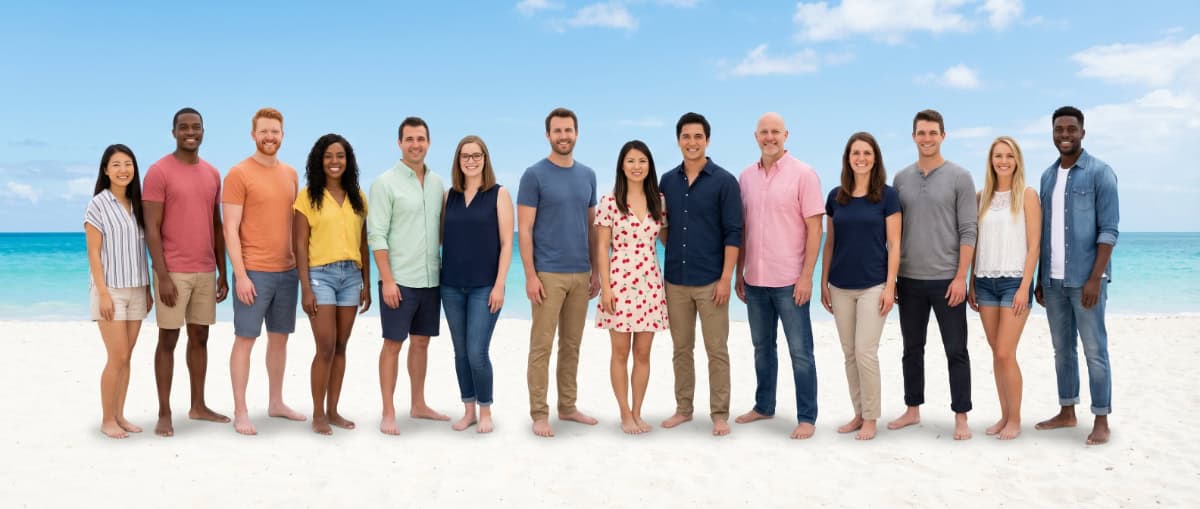
The first run missed the mark. The first result had flat, even lighting with shadows that couldn’t agree on a direction. The whole thing felt assembled. You could tell it was a composite at a glance. Worse, the AI left out the individual shot entirely and invented a new person to fill the gap. Did they add someone to the team while I was building the composite?
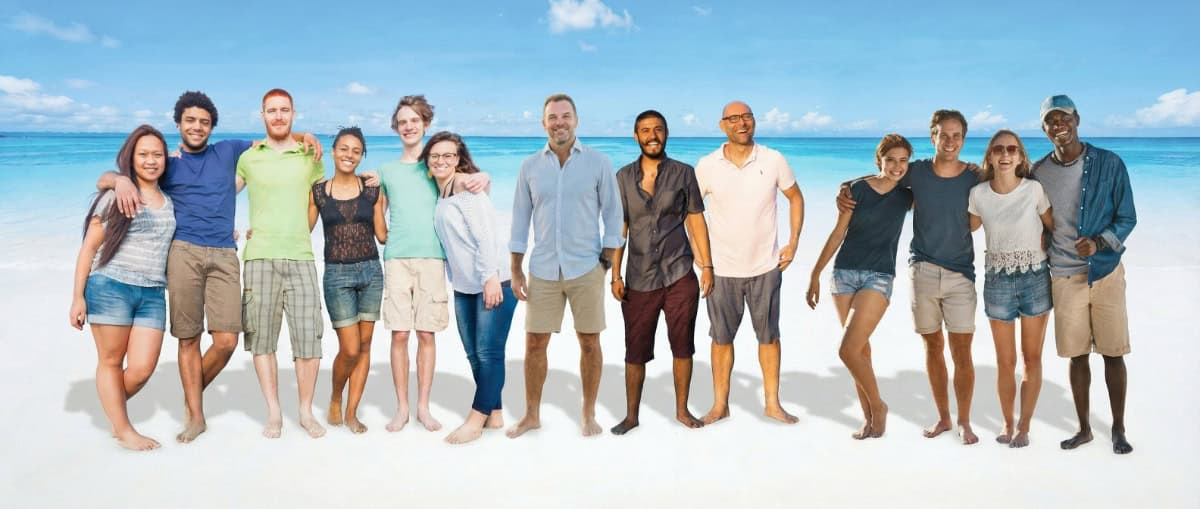
The second run was somehow worse. It looked like someone had cut out each group with scissors and glued them onto the background. And one person from the group of three was just missing. Did she get fired, or did the AI decide to downsize the department?
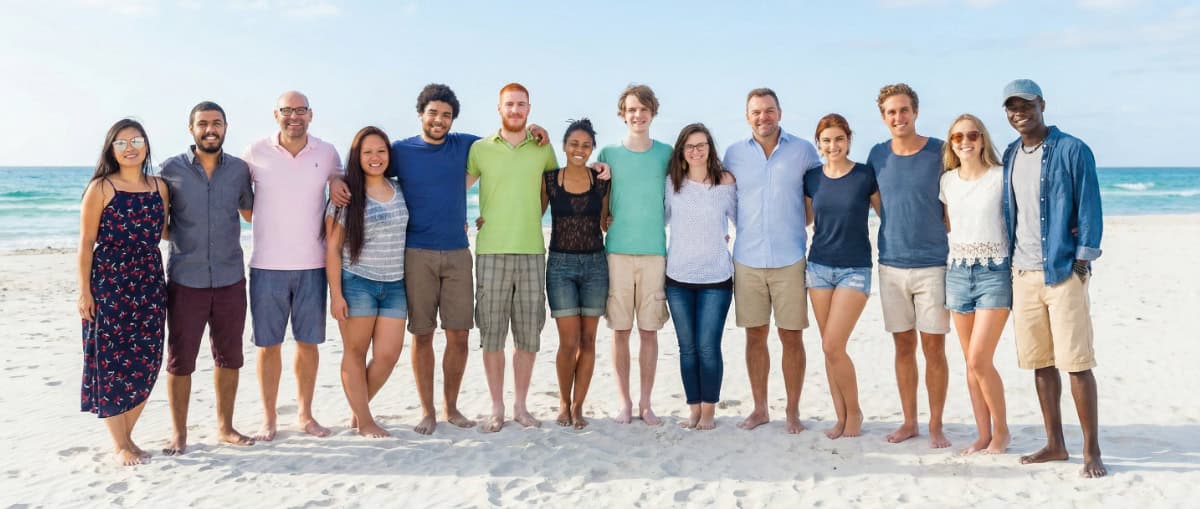
Third time worked. The light feels consistent. Shadows fall the same direction. Everyone is present, wearing what they were actually wearing. The AI did ignore one part of the prompt. I had asked for space between everyone, arms at their sides. Instead, it put them in a natural group pose with arms around shoulders. And it was the right call. The result looks like a group of people who actually enjoy working together. Sometimes the AI reads the room better than the prompt.
Why Running One Before Running Three Matters
There’s a workflow lesson buried in those three attempts. If you run three iterations on your first prompt and the direction is wrong, you’ve wasted two runs. Credits gone, time gone, nothing to show for it.
A better approach: run one. Just one. Look at it. Is the AI heading where you need it to go, or did it misunderstand the brief entirely?
If it’s way off, rewrite the prompt. Be more specific about the parts it got wrong.
If it’s close, like ours was, run another. Two or three passes on a prompt that’s close. Pick the strongest result. If it hasn’t gotten it right after three runs you need to adjust your prompt.
The Last Ten Percent
That third composite looked solid at normal viewing size. But zooming to two hundred percent in Photoshop told a different story. Some of the heads and shoulders had a faint halo where the AI blended them against the sky. Not visible at normal size, but the kind of thing that would show up in print.
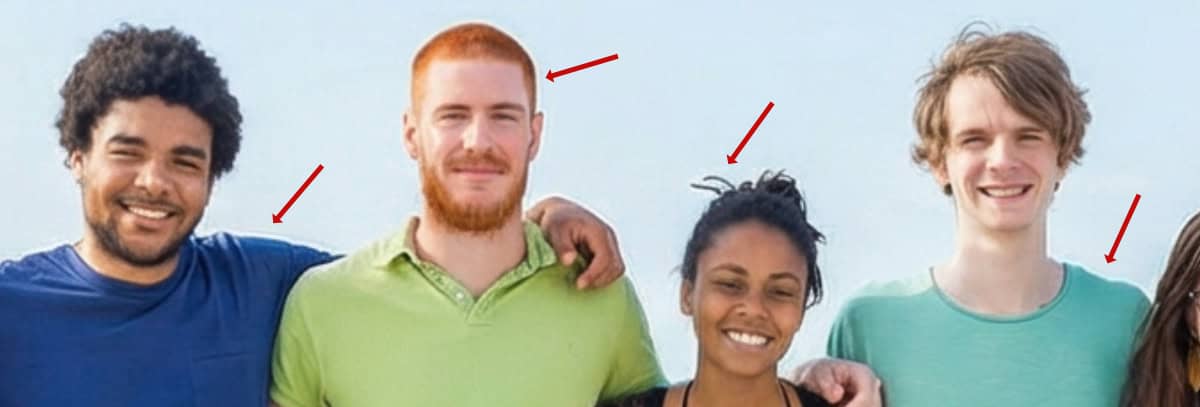
Two minutes with a brush. Picked up the sky color, softened the edges. Done. The kind of fix that used to take two minutes twenty years ago, too. Some things don’t change.
That’s the honest split right now. AI handles the heavy compositing, the extraction, the lighting matching, the body generation. It gets you most of the way there. That last stretch, where something looks almost right but not quite, that’s still your eye and your skill.
Fourteen people who couldn’t be on the same beach, standing together on one. Built from four mismatched photos, a beach plate, three AI passes, and two minutes in Photoshop.